
On March 2, 2026, Iranian Foreign Minister Abbas Araghchi sent a formal letter to the United Nations Security Council demanding an immediate session to address what he called “unprovoked and unjustified acts of aggression” by the United States and Israel. The Security Council never voted on a resolution in response — not because one was defeated, but because none was ever put forward. The United States, as a permanent member of the Council and a direct party to the military strikes in question, held veto power that effectively preempted any binding action before it could begin.
The letter followed Operation Epic Fury, a joint US-Israeli military campaign launched on February 28, 2026, that killed Iran’s Supreme Leader Ayatollah Ali Khamenei and struck over 500 military targets across the country. Araghchi accused both nations of committing an “atrocious terrorist act” that “flagrantly violated the national sovereignty and territorial integrity of the Islamic Republic of Iran.” He demanded accountability. What he got instead was a structural lesson in how the UN Security Council functions — or fails to function — when one of its five permanent members is the accused party. This article examines the contents of Iran’s letter, the emergency Security Council session that preceded it, the geopolitical fault lines the debate exposed, and why the Council’s institutional design made a formal response nearly impossible from the start.
Table of Contents
- What Did Iran’s Letter to the UN Security Council Actually Say?
- Why the Security Council Could Not Formally Respond to the Strikes
- The Emergency Session That Became a Forum for Speeches
- How the US Presidency of the Security Council Compounded the Problem
- The Limits of International Law When Great Powers Act
- What Iran’s Letter Means for the Diplomatic Record
- What This Crisis Reveals About the Future of the Security Council
- Conclusion
- Frequently Asked Questions
What Did Iran’s Letter to the UN Security Council Actually Say?
The letter, addressed to UN Secretary-General António Guterres and UK Ambassador James Kariuki, who held the rotating presidency of the Security Council at the time, was delivered on March 2, 2026 — two days after the strikes began. Araghchi’s language was pointed and legalistic. He accused the US and Israel of committing acts that violated iran‘s “national sovereignty and territorial integrity,” framing the military operation not as a strategic strike but as an illegal act of war under international law. The letter demanded the Security Council convene immediately, order a halt to the “unlawful use of force,” and hold the aggressors accountable under the UN Charter. Araghchi went further than simply lodging a complaint.
Copies of the letter were distributed to the foreign ministers of all UN member states, and Iran requested the letter be published as an official Security Council document — a procedural move designed to place the accusations permanently on record regardless of whether the Council took action. The language mirrored earlier warnings Iran had issued. On February 19, 2026, Iran had told the UN it would “respond decisively to any military aggression,” language that now carried a different weight in the aftermath of Khamenei’s death. The letter was, in diplomatic terms, both a legal filing and a political statement. It put Iran’s position into the formal machinery of the United Nations, even as it was widely understood that the machinery itself could not produce a binding result. That understanding — that the US veto made formal Council action impossible — was the central frustration behind Iran’s appeal.
Why the Security Council Could Not Formally Respond to the Strikes
The UN Security Council operates under a structure established in 1945, granting veto power to five permanent members: the United States, the United Kingdom, France, Russia, and China. Any one of these nations can block a resolution, regardless of how the other fourteen members vote. This means that when a permanent member is directly involved in a military conflict, the Council is structurally incapable of condemning or restraining that member through a binding resolution. In this case, the US was both the actor and the gatekeeper. No draft resolution condemning the strikes was ever brought to a vote because the outcome was predetermined — the United States would veto it. This is not speculation; it is standard practice. The US has used its veto dozens of times to block resolutions critical of its allies or its own military actions, most frequently in relation to Israel.
The result was that Iran’s demand for accountability ran headfirst into an institutional wall that has existed since the founding of the United Nations. However, the absence of a formal vote does not mean the Council was silent. What happened instead was a session of statements — a diplomatic forum where nations could express positions without any binding consequences. For countries like China and Russia, this was an opportunity to condemn the strikes publicly. For the United States and its allies, it was something to manage. But the distinction matters: statements carry no enforcement power. Without a resolution, the Security Council produced words, not action.
The Emergency Session That Became a Forum for Speeches
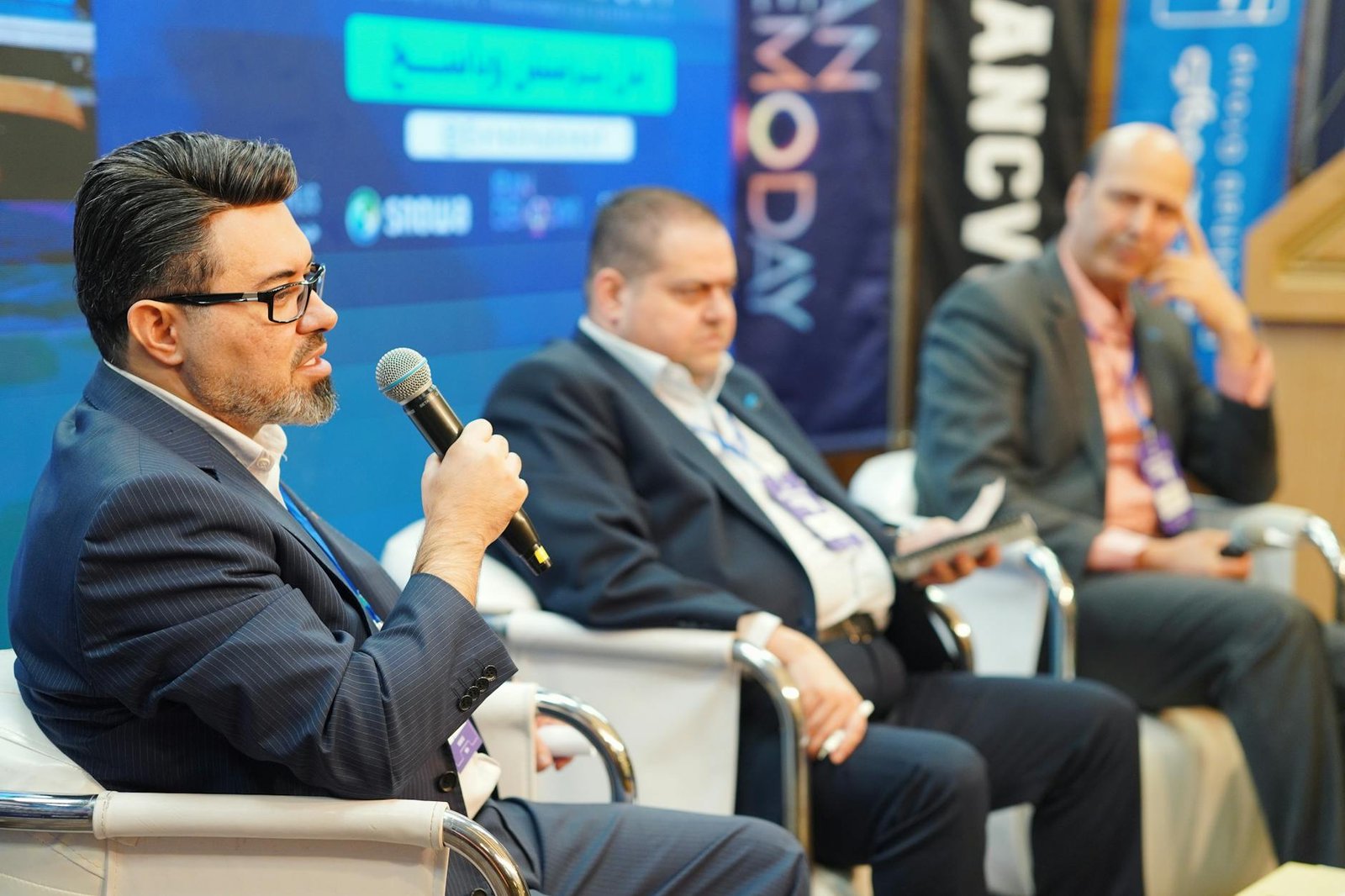
The emergency Security Council session was actually convened on February 28, 2026 — the same day the strikes began — at the request of French President Emmanuel Macron, with support from China, Russia, Bahrain, and Colombia. It was one of the fastest emergency sessions called in recent UN history, reflecting the severity of the crisis. But what unfolded inside the chamber was less a deliberation than a series of national position statements with no prospect of a unified outcome. China and Russia used the session to strongly denounce the US-Israeli strikes, framing them as violations of international law and the UN Charter. Colombia and Pakistan joined in criticizing the action as a breach of sovereignty.
The response from Europe was notably more cautious. The five European members on the Council at the time — France, Denmark, Greece, Latvia, and the United Kingdom — focused their remarks on Iran’s nuclear activities and its domestic crackdown on dissent. None of them directly commented on the legality of the strikes themselves, a diplomatic sidestep that drew sharp criticism from observers who noted the contrast with European rhetoric about rules-based international order. Israel and the United States, for their part, largely declined to engage with the legal arguments. Fortune reported that both nations “stiff-armed” the UN during the emergency meeting, treating the session as a procedural obligation rather than a meaningful forum. The result was a meeting that illustrated, in real time, the gap between what the Security Council is supposed to do and what it can actually accomplish when great power interests collide.
How the US Presidency of the Security Council Compounded the Problem
The timing could not have been more fraught. The United States assumed the rotating presidency of the Security Council for March 2026 — days after launching a military operation that much of the world wanted the Council to address. The presidency is a procedural role, not an executive one, but it grants significant agenda-setting power. The president determines which issues receive formal discussion, schedules meetings, and drafts the monthly programme of work. Russia and China responded by blocking the adoption of the US-drafted programme of work for March, an unusual procedural standoff that reflected deeper objections. Their complaints went beyond the Iran strikes; they also raised disputes about the 1737 Iran Sanctions Committee, which oversees sanctions that had been reimposed after the UK, France, and Germany triggered the “snapback” mechanism in September 2025.
The sanctions fight and the military conflict had become entangled, turning every procedural decision into a proxy battle over the legitimacy of the strikes. The tradeoff was clear: the US presidency gave Washington control over the Council’s agenda, but it also intensified the perception that the body was compromised. A Security Council that cannot act on a military strike because the attacker holds the gavel is, for many nations, not a neutral institution but a captured one. Whether that perception is fair depends on where you sit — the US and its allies would argue the Council was never designed to override sovereign military decisions by its most powerful members. Critics would say that is precisely the problem.
The Limits of International Law When Great Powers Act
The killing of Ayatollah Ali Khamenei brought the limitations of international legal frameworks into sharp relief. His death was confirmed by the Iranian government on March 1, 2026, along with several family members killed in the same strikes. The operation involved approximately 200 Israeli fighter jets, more than 1,200 bombs dropped in 24 hours — the largest combat sortie in Israeli Air Force history — and US missiles and drones. Israel struck over 500 military targets. President Trump gave the order from Air Force One. Under international law, the targeted killing of a head of state raises profound questions about sovereignty, proportionality, and the legal basis for the use of force. Iran’s letter explicitly invoked these principles.
But international law, unlike domestic law, has no independent enforcement mechanism. The International Court of Justice can issue rulings, but compliance is voluntary. The Security Council is the only body with the authority to impose binding consequences — and it was blocked. A US human rights group called for an emergency UN meeting on March 4, 2026, to end what it described as the “illegal” Iran war, as reported by Military.com. But the call underscored a warning that international legal scholars have raised for decades: the UN system was designed by the victors of World War II to preserve their own freedom of action. When those same powers are the ones using force, the system has no corrective mechanism. This is not a bug in the architecture — it is the architecture.

What Iran’s Letter Means for the Diplomatic Record
Even without a Security Council resolution, Iran’s letter serves a purpose that outlives the immediate crisis. By requesting its publication as an official Council document and distributing copies to every UN member state, Araghchi ensured that Iran’s legal position — its accusation of aggression, its demand for accountability — became part of the permanent diplomatic record. Future legal proceedings, whether at the International Court of Justice or in other forums, can reference this document as evidence of Iran’s formal objection.
This is a pattern seen in previous conflicts. When nations cannot secure a binding response from the Security Council, they often shift to building a legal and rhetorical record for use in other venues. It is a long game, and it may never produce the accountability Iran demanded. But it ensures the accusations are not simply forgotten — they are filed, catalogued, and available to future diplomats, historians, and legal advocates.
What This Crisis Reveals About the Future of the Security Council
The Iran crisis of 2026 is unlikely to be the last time the Security Council finds itself paralyzed by the veto power of a member state involved in a military conflict. If anything, the precedent reinforces a trend. Russia’s veto of resolutions related to Ukraine, the US veto of resolutions related to Israel’s operations in Gaza, and now the preemptive blockage of any response to the Iran strikes all point in the same direction: the Council is increasingly a forum for posturing rather than action when permanent members are involved.
Calls for Security Council reform — expanding permanent membership, limiting veto power, or creating alternative enforcement mechanisms — have circulated for years. The events of February and March 2026 will add fuel to those arguments. But reform requires the consent of the very nations that benefit from the current structure, which means the system is likely to remain as it is: functional when great powers agree, frozen when they do not. For countries like Iran, the letter to the Security Council was both a demand for justice and an acknowledgment that the institution designed to deliver it cannot.
Conclusion
Iran’s letter to the UN Security Council was a formal demand for the international community to condemn and halt the US-Israeli military strikes that killed Ayatollah Ali Khamenei and devastated military infrastructure across the country. The Security Council’s response — or lack of one — was determined before the letter was even delivered. No resolution was drafted, no vote was held, and no binding action was taken, because the United States held the power to block any such outcome and everyone in the chamber knew it. The episode lays bare a contradiction at the heart of the post-World War II international order.
The body charged with maintaining global peace and security cannot function when its most powerful members are the ones waging war. Iran’s letter is now part of the permanent record, a document that may matter in future legal and diplomatic contexts. But in the immediate term, it changed nothing. The strikes continued, the Council moved on to procedural disputes over its monthly agenda, and the gap between international law as written and international law as practiced grew a little wider.
Frequently Asked Questions
Did the United States actually cast a veto on Iran’s request?
No. The US did not formally cast a veto because no resolution was ever brought to a vote. The threat of a US veto as a permanent Security Council member preempted any binding Council action from being proposed.
Who requested the emergency Security Council session?
French President Emmanuel Macron requested the emergency session on February 28, 2026, with support from China, Russia, Bahrain, and Colombia.
Was Ayatollah Khamenei’s death confirmed?
Yes. The Iranian government confirmed the death of Supreme Leader Ayatollah Ali Khamenei on March 1, 2026, one day after the US-Israeli strikes began. Several family members were also killed.
What was the scale of the military operation?
The operation involved approximately 200 Israeli fighter jets, over 1,200 bombs dropped in 24 hours, strikes on more than 500 military targets, and US missiles and drones. Israel called it the largest combat sortie in IAF history.
Can Iran take legal action outside the Security Council?
Iran could pursue cases at the International Court of Justice or other international legal forums. However, compliance with ICJ rulings is voluntary, and enforcement would still require Security Council action — bringing the process back to the same structural barrier.
What happened with the Security Council’s March 2026 agenda?
Russia and China blocked the adoption of the US-drafted monthly programme of work for March, objecting over the Iran crisis and disputes related to the 1737 Iran Sanctions Committee and “snapback” sanctions.